
Growing up in south Louisiana skewed my sense of food. When I was a kid in elementary school, almost everyone I knew cooked or talked about cooking. I remember one of my 7th grade classmates at St. Joan of Arc reading his “How To” essay to the class and the topic was cooking jambalaya. During the reading a couple of the kids questioned his methodology. That was life in south Louisiana. Most of my friend’s parent’s were born to people that had to cook. Cooking was something everyone did, especially my mom.
Virginia Baylor was born in 1933 and raised in Durango, Mexico. Her parents were professional cattle ranchers, and granddaddy was known to his Mexican caballeros as Big Tom. As kids we visited the ranch in Durango several times and while there we helped gather eggs from the chickens, make bread or tortillas, dig potatoes, peel mangoes, or whatever Mom and Grandma needed. As a teenager I gravitated to Mom’s south Louisiana kitchen. Our neighborhood was crowded with men that hunted and fished and women that cooked gumbos, jambalayas, etouffees, and court bouillons. Our house was the outlier because Mom preferred to cook tamales, tacos, enchiladas or chicken en mole and for whatever reason, I was the one that gravitated to her side when it was time to cook. Perhaps it was because I was the middle child of five? Whatever the reason, I learned a lot about cooking from her. Dinner at our house had to happen quickly. Mom was an OR Nurse and would arrive home about 5:00 pm and dinner for seven was almost a nightly affair. From her I learned about timing (one cannot start cooking green beans before the chicken is cooked), complimentary proteins, the basics of soups and stews, why certain cuts of beef should be braised, the dangers of overmixing mashed potatoes, and how to choose fresh vegetables. She often made fresh bread, and her biscuits were sublime.

All through college, culinary school, and my time cooking in several glorious New Orleans restaurants, it was her lessons that carried me through. At that time, I just didn’t know or realize it.
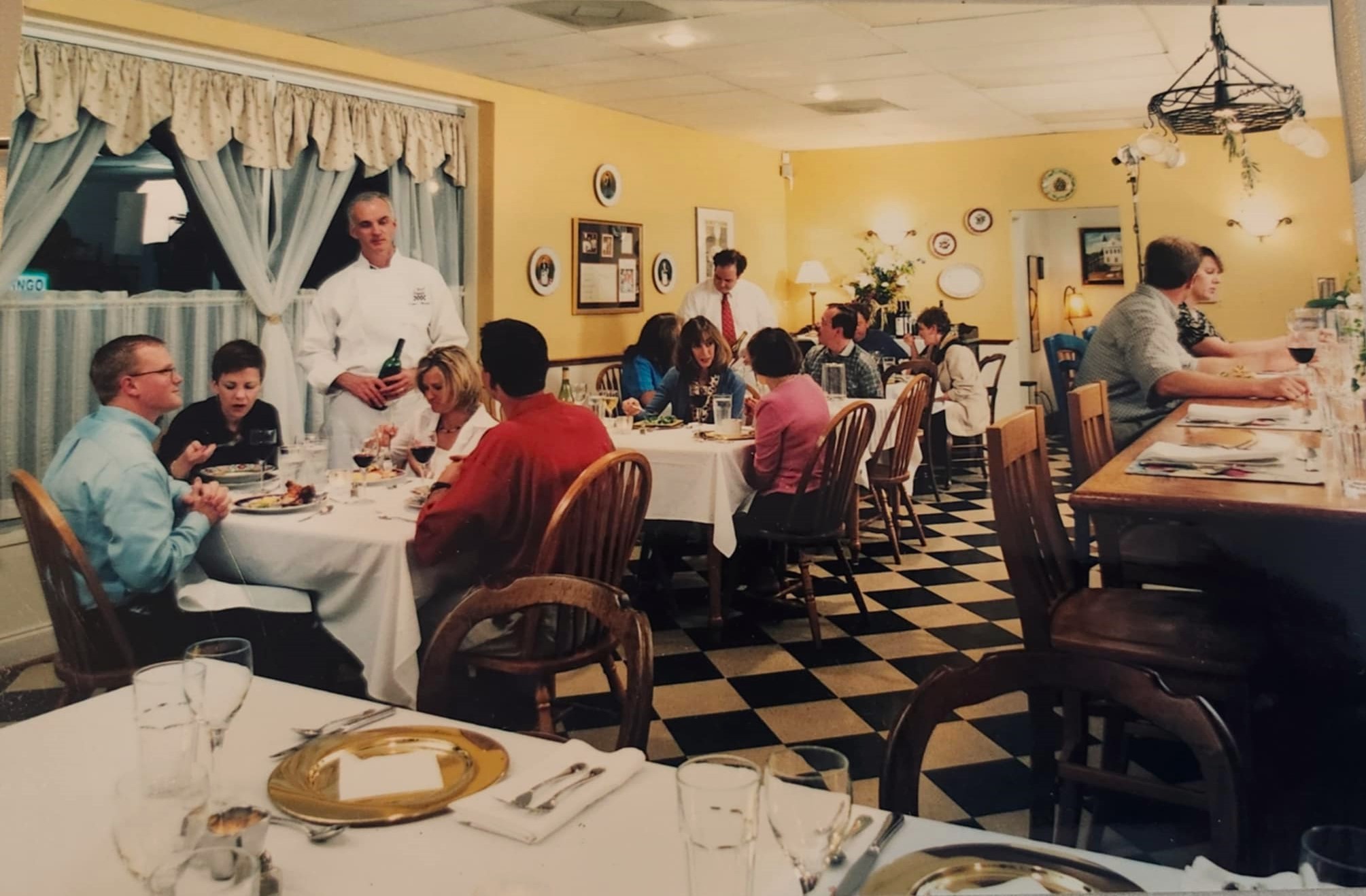
Cooking is a craft and although the end result can occasionally be artistic, it isn’t an art form. Much of it cannot be learned by watching and copying. You have to get in there and try, and fail, and try again. Start with the simple lessons and work your way up to the more complex. I probably spent at least ten years, probably more, undeservedly being called “Chef.” That’s because I just happened to be in charge of a kitchen and while the food my crew turned out may have been delicious, it was also nothing to write home about. By the time Amy and I opened 33 Liberty, much about my food and my understanding of the title Chef had changed. I can thank my Mom for that change. Our lessons we learn as kids often take years to gel and somewhere in my early 40s I began to teach, to coddle, to mentor my young cooks. They were there to learn and learning is what kept them engaged. About a year after we opened 33 Liberty, young cooks were knocking on our door because they heard this was the place to learn. We changed our menu weekly, we shopped at the farmer’s market twice a week, we had farmers bringing us fresh fruits and vegetables because they heard we wanted the best. We were careful, intentional about our plate design, our sauces, our garnish, and our wine list. All of those things Mom taught me now came full circle and again, I just didn’t realize it at the time.

One of those young cooks was Joe Cash of Scoundrel. I believe Joe was 19 at the time, right out of high school and with stars in his eyes. When our dishwasher called out sick he took over with a smile. When it was time to bake bread, he listened intently, when a farmer showed up with 30 pounds of gorgeous August tomatoes, he diligently peeled them, and when we ground pork and veal for sausage, he was giddy with the excitement of learning. Joe was one of the many cooks that helped make 33 Liberty wonderful, yet I owe it all to Mom.
I believe the most important thing we as humans can do is to pass on our knowledge to someone willing and able to learn. That’s how the memory of our parents, our mentors, our grandparents live on. My wife sews and paints and bakes because her mother and grandmother taught her. When she sews, she often quotes one of their lessons. I don’t remember yet perhaps when I was teaching a young cook something important, I led with “Mom taught me to…”
The lessons that we absorb are akin to a pebble thrown into the middle of a pond. They create ripples that travel outward and interact with returning ripples. Perhaps one or two lessons that Joe learned in his year at 33 Liberty were lessons of my Mom, one that she learned from hers and now those lessons are being taught in the kitchen of Scoundrel. Today, the lessons Joe spent years absorbing are now being shared with his young cooks and they in turn will one day share them with their own team.
When my mother passed away some years ago I yearned for some “thing” of hers, a keepsake that I could touch and hold, something that would instantly remind me of all the good in her. However, the best part of her was never a noun, but a verb that often came alive in the kitchen. It was action, discipline, and respect for even the simplest of the land’s bounty. A tomato in August, a gift of onions from a friend, or a bushel of sweet potatoes at Thanksgiving, all carefully prepared, and shared with love.